

Insurance plays an important role in financial planning by providing protction against unexpected events. Whether it involves safeguarding your family’s future, managing medical expenses, or protecting valuable assets, having suitable insurance coverage can help reduce financial uncertainty.
With the growing availability of digital financial services, purchasing insurance has become more convenient. Individuals can now compare policies, review coverage options, and complete applications without visiting an insurance branch. However, understanding the features, exclusions, and conditions of a policy is essential before making a purchase.
Table of Contents
Why Is Buying Insurance Important?
Insurance provides financial protection against specified risks in exchange for regular or one-time premium payments.
Different insurance products serve different purposes. Life insurance provides financial support to beneficiaries following the insured person’s death, while health insurance helps cover eligible medical expenses.
Motor insurance offers protection against specified vehicle-related risks and third-party liabilities.
When individuals buy insurance, they should consider their financial responsibilities, potential risks, and the level of protection required.
Selecting appropriate coverage can help prevent unexpected expenses from disrupting long-term financial goals.
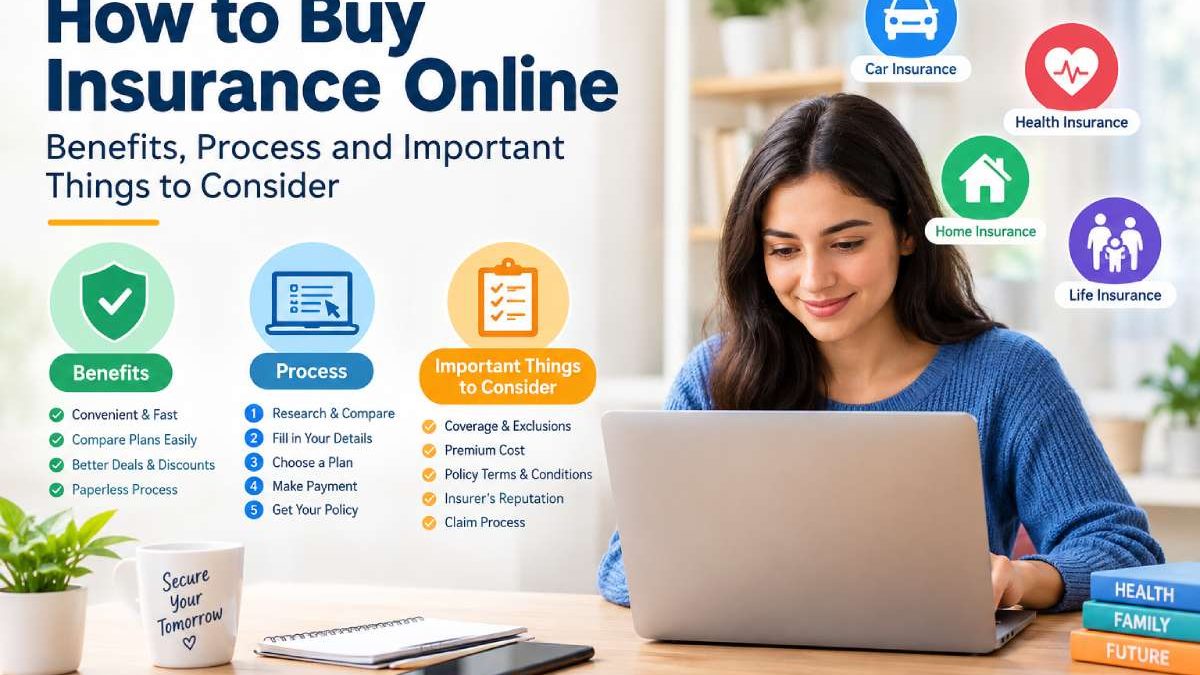
Benefits of Buying Insurance Online
Purchasing insurance digitally offers several advantages compared with traditional offline processes.
1. Convenient Policy Comparison
Online platforms allow individuals to compare insurance products based on premiums, coverage, benefits, and exclusions.
This makes it easier to evaluate different options before selecting a suitable policy.
2. Time-Saving Application Process
Online applications can often be completed from home without visiting an insurance office.
Applicants can enter their details, upload documents, and make payments through digital platforms.
3. Greater Transparency
Insurer websites generally provide information about policy features, coverage limits, exclusions, and terms.
Reviewing these details can help buyers understand what they are purchasing.
4. Flexible Payment Options
Many insurers offer digital payment methods, including net banking, cards, and UPI.
Available payment frequencies may vary depending on the insurance product.
5. Easy Access to Policy Documents
After successful issuance, insurers commonly provide electronic policy documents.
These can be stored digitally and accessed when required for reference or claims.
How to Buy Insurance Online
The process of purchasing insurance digitally generally involves a few important steps.
Step 1: Identify Your Insurance Requirements
Start by determining the type of insurance needed.
Consider your income, dependants, financial liabilities, healthcare requirements, or vehicle-related risks.
Your coverage requirements should reflect your individual circumstances.
Step 2: Compare Available Policies
Research insurance products offered by different providers.
Compare premiums, coverage amounts, exclusions, waiting periods, deductibles, and additional benefits.
Avoid selecting a policy solely because it has the lowest premium.
Step 3: Choose Suitable Coverage
Select a coverage amount that adequately addresses your financial requirements.
For life insurance, consider income replacement and outstanding liabilities.
For health insurance, assess medical expenses and available healthcare benefits.
Step 4: Provide Accurate Information
Complete the application using correct personal, financial, and other requested details.
Depending on the policy, insurers may ask about medical history, occupation, lifestyle habits, or previous insurance coverage.
Accurate disclosure is important for underwriting and claim assessment.
Step 5: Complete Payment and Verification
After reviewing the application, complete the payment through the insurer’s authorised platform.
Certain policies may require additional verification, documentation, or medical examinations before approval.
Step 6: Review Your Policy Documents
Once the policy is issued, carefully check the coverage amount, nominee information, policy duration, exclusions, and premium details.
Contact the insurer promptly if any information is incorrect.
Important Factors to Consider Before Purchasing Insurance
Before you buy insurance online, reviewing the policy’s terms and conditions is essential.
Coverage: Ensure that the policy protects against risks relevant to your requirements.
Exclusions: Understand situations where the insurer may not provide compensation.
Premium Affordability: Select a policy with premiums you can maintain over the required period.
Claim Process: Review the insurer’s claim procedures, documentation requirements, and customer support facilities.
Additional Benefits: Evaluate optional riders or add-ons based on their usefulness and cost.
Insurer Reliability: Consider regulatory registration, publicly available claim information, and service accessibility.
These factors can help buyers make informed decisions rather than focusing exclusively on pricing.
Common Mistakes to Avoid When Buying Insurance
One common mistake is selecting insufficient coverage to reduce premium expenses.
Another is failing to read policy exclusions, waiting periods, or deductibles.
Applicants should also avoid providing incomplete or inaccurate information during the application process.
Purchasing unnecessary add-ons can increase costs without offering meaningful benefits.
Additionally, buyers should use authorised insurer websites or legitimate insurance intermediaries to reduce the risk of fraudulent transactions.
Conclusion
Buying insurance online provides a convenient way to explore financial protection options, compare policies, and complete applications digitally.
However, convenience should not replace careful evaluation. Understanding coverage requirements, reviewing exclusions, comparing premiums, and providing accurate information are essential steps in selecting suitable insurance.
By making informed decisions and choosing policies aligned with their financial needs, individuals can build stronger financial protection against unexpected circumstances.
Also Read: Empowering Caregivers: Building a Business with Heart
