
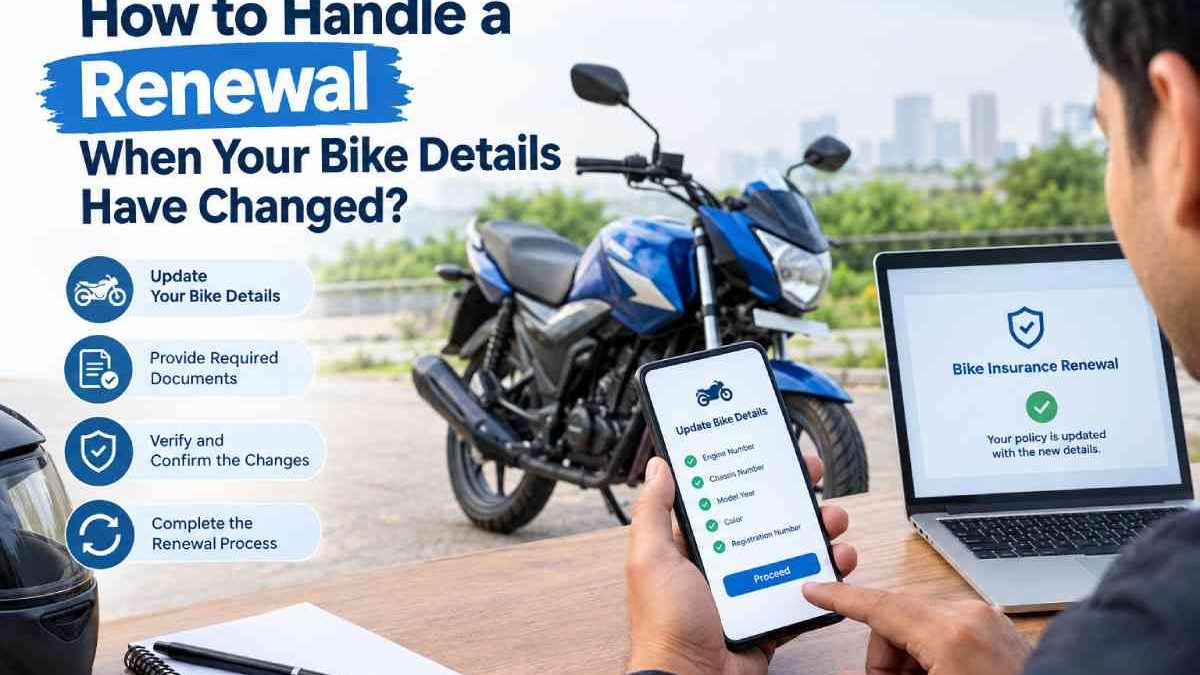
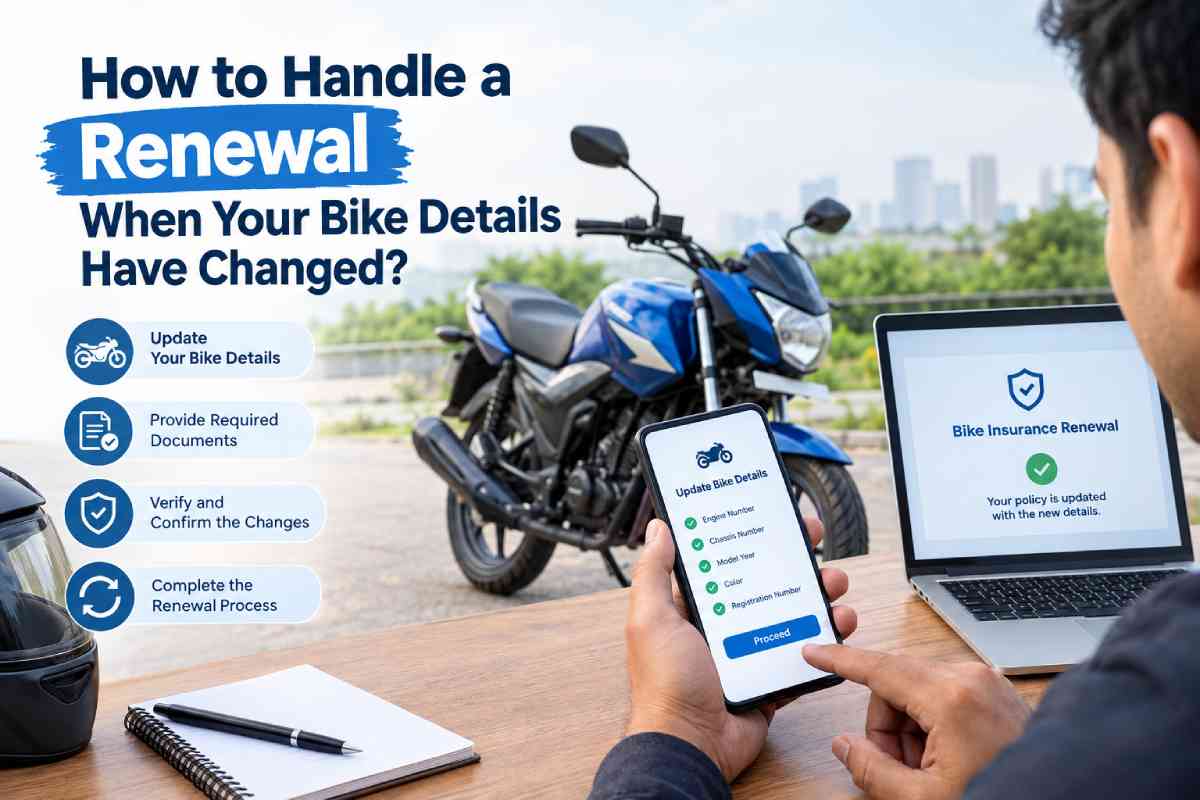
Renewing insurance is usually a matter of confirming what is already on file and paying. But sometimes the bike on your policy is not quite the bike in your garage anymore. Maybe you changed the registration after a move, added accessories, converted the engine, or the ownership itself shifted. When your details no longer match the ones the insurer has, a routine renewal turns into something you need to handle with a little care. Getting it right keeps your coverage valid, because a policy that describes the wrong bike may not protect you when you need it.
Table of Contents
Why do changed details matter at renewal?
Because your policy is built around the specific bike it describes. The registration number, engine and chassis numbers, make, model, and even declared value all define what is insured. If reality drifts from those details, the policy and the bike no longer line up.
That mismatch is not a small technicality. In the event of a claim, an insurer checks that the insured vehicle matches the one in the accident, and a discrepancy can complicate or even jeopardize the payout. So updating your details at renewal is not paperwork for its own sake. It is what keeps your bike insurance actually able to do its job when something goes wrong. Renewal is the natural moment to bring the record back in line with reality.
What kinds of changes need to be updated?
Several, and some are less obvious than others. A change in your registration number, which can happen if you move your bike to a different state and re-register it, is a clear one that must be reflected on the policy.
Ownership changes matter too. If you bought the bike secondhand or sold it, the policy needs to follow the correct owner. Modifications count as well, like adding expensive accessories, changing the engine, or converting it to run on a different fuel, since these alter the bike’s value and risk. Even a change in how you use the bike can be relevant. If any of these apply to you, a bike insurance renewal is the right time to declare them rather than letting the record fall out of date.
How do you update your registration number on the policy?
Usually by informing the insurer and providing the new registration document. When you re-register a bike, perhaps after relocating, the vehicle keeps its identity but gains a new number, and your policy should carry that new number too.
At renewal, you can typically enter the updated registration through the insurer’s website or app, or contact them to have it changed. They may ask for the new registration certificate as proof. This is a straightforward update, but skipping it leaves your policy pointing at a number that no longer exists, which is exactly the kind of mismatch that causes trouble later. Handling it during a bike insurance renewal keeps everything consistent from the start of the new term.
What if the ownership of the bike has changed?
This one needs proper attention, because insurance does not automatically transfer with a casual handover. If you have bought a used bike, the policy needs to be put in your name, and if you have sold yours, the coverage should move to the new owner or be handled accordingly.
Transferring a policy usually involves submitting the ownership transfer documents and updating the insurer’s records. There is often a window within which this should be done after a sale or purchase, so it is worth acting promptly rather than assuming the existing policy simply covers whoever holds the bike. Renewing a policy that still names a previous owner is a recipe for a rejected claim. Getting the ownership right is one of the most important corrections to make.
Do modifications and accessories change your renewal?
They can, and declaring them protects you. If you have added valuable accessories, altered the engine, or made other significant changes, the bike is no longer the standard version the insurer originally priced. Its value and risk profile have shifted.
Declaring modifications at renewal lets the insurer adjust the coverage and premium to match the bike as it now is. It may raise the premium slightly, but it ensures those additions are actually covered and that the policy reflects the real vehicle. Hiding a modification to keep the premium down is a false economy, since an undeclared change can give the insurer grounds to question a claim. Honesty here is what makes the coverage dependable. A renewal is the cleanest point to bring these details up to date.
Could changed details affect your premium or coverage?
Yes, and it is better to know that upfront than be surprised. Some changes raise the premium, like added accessories or a higher declared value, because there is more to insure. Others might leave it unchanged, like a simple registration number update.
The important thing is that the premium reflects the real bike. A policy priced for a lesser version than you actually own is not a bargain, since the gap can surface at claim time. Similarly, updating details ensures your coverage genuinely extends to the current state of the vehicle. Your bike insurance is only as reliable as the accuracy of what it describes, so a premium that moves to match a real change is the system working correctly, not a penalty.
So how should you approach a renewal with changed details?
Treat the renewal as a chance to reconcile the policy with reality, not just click through it. Before you confirm, run through what has changed since last year: the registration, the ownership, any modifications, the declared value, and how you use the bike.
Update whatever no longer matches, providing the supporting documents the insurer asks for, and let the premium adjust to reflect the accurate picture. If a change is significant, like an ownership transfer, handle it properly rather than hoping the old policy stretches to cover it. A few extra minutes spent aligning the details keeps your coverage valid and your claims defensible. A bike insurance renewal done this way is not just a payment. It is a checkpoint that makes sure the policy still protects the bike you actually ride.
Also Read: Beaconsoft Latest Tech Info: Complete USA Technology Guide
